

In short: when choosing a railing, look at three things: safety (height, gaps, strength and fixing), material (durable in the climate and under use) and appearance (harmony with the façade and the space). In a humid, salty-air coastal city like İzmir, 316-grade stainless steel, powder-coated aluminium or painted galvanised steel stand out outdoors, while glass, stainless steel and wood combinations stand out indoors. Whatever the material, height, gap and fixing strength must follow the current regulation and the installer’s calculations. This guide covers selection, measuring, installation and care for balcony, stair, terrace and mezzanine railings.
Why does a railing matter so much?
A railing is the last line of protection against a fall; it also directly shapes the look of the façade, stairs and terrace. When mistakes are made there are two outcomes: a safety risk, and the cost of rebuilding because of early rust, loosening or deterioration. So with railings, you should choose not the cheapest or merely the prettiest, but the right material, right measurements and right fixing.
What strains a railing in İzmir?
- Humidity and salty air: Near the coast they speed up corrosion; protection of steel, fixings and paint matters.
- Sun and heat: Dark colours heat up, paint can fade over time; glass and metal expand.
- Rain and the façade: Winter rain can cause paint damage and standing water; floor and anchor points are critical for waterproofing.
- Heavy use: In homes with children and pets, the risk of climbing and getting stuck also needs thought.
Railing materials compared
| Feature | Glass | Stainless steel | Aluminium | Iron / steel |
|---|---|---|---|---|
| Look | Transparent, airy | Clean, metallic | Many colours and patterns | Classic to modern patterns |
| Outdoors in İzmir | Fixings must be durable | 316 recommended | Very suitable with powder coating | Galvanising + paint essential |
| Care | Wiping and cleaning | Low | Low | Paint touch-ups may be needed |
| Privacy | None (partly with frosted glass) | Low | Depends on the pattern | Depends on the pattern |
| Weight | Heavy | Medium | Light | Heavy |
| Cost tendency | Medium–high | High | Medium | Low–medium |
The cost tendency is a general comparison; the exact price varies with dimensions, thickness, coating and installation conditions.
Glass railing
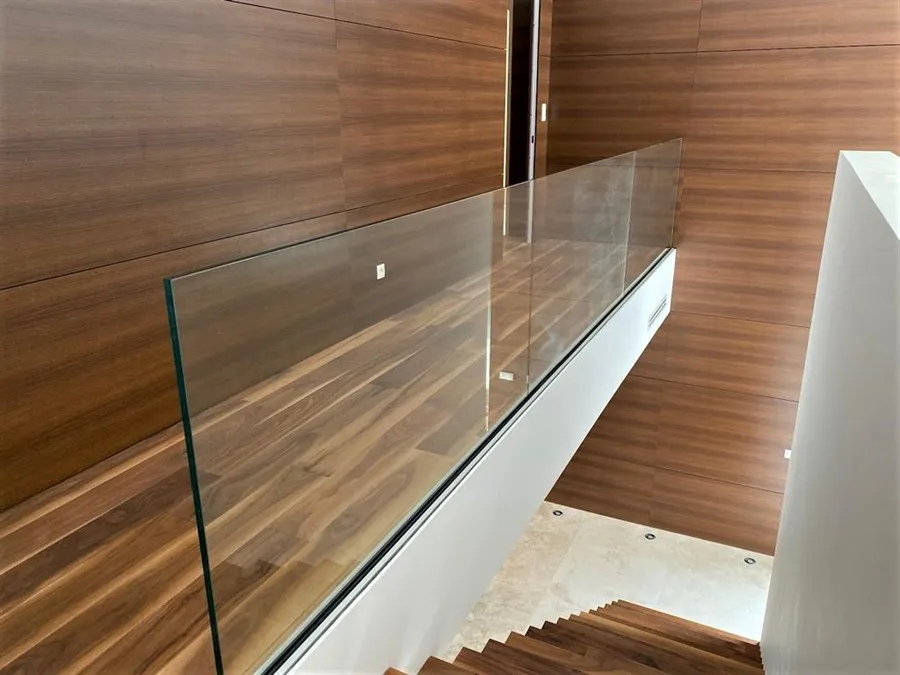
A glass railing does not block the view or light. For safety, tempered and laminated glass is preferred; thickness and fixing details are set per project. System types:
- Frameless (channel system): The glass is fixed into a channel in the floor; the cleanest, airiest look.
- Framed: The glass is held by aluminium or stainless profiles; easier to install and maintain.
- Point-fixed: The glass is held at certain points by metal fittings; modern, but the fixing detail is delicate.
Glass needs fingerprints, salt and dust marks wiped off, more often near the sea.
Stainless steel railing
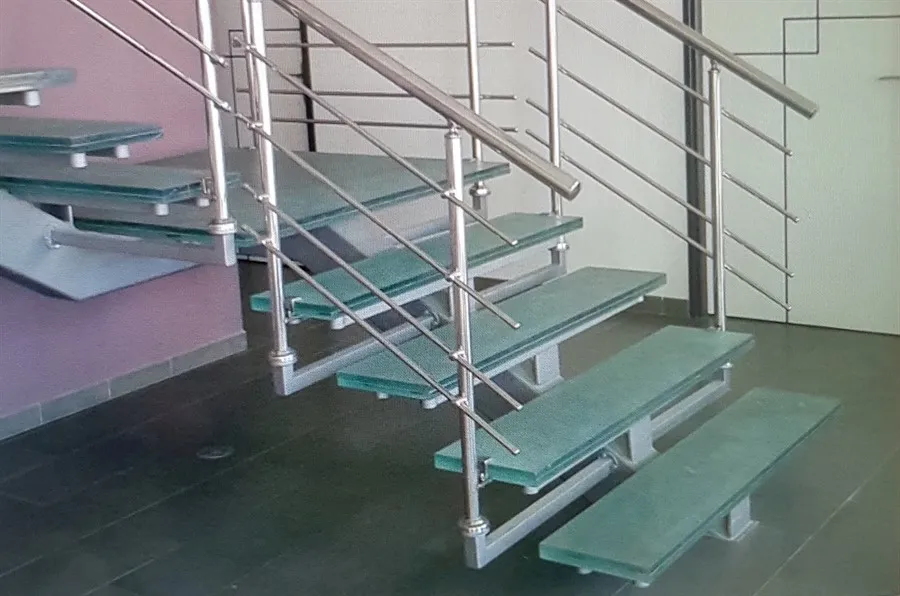
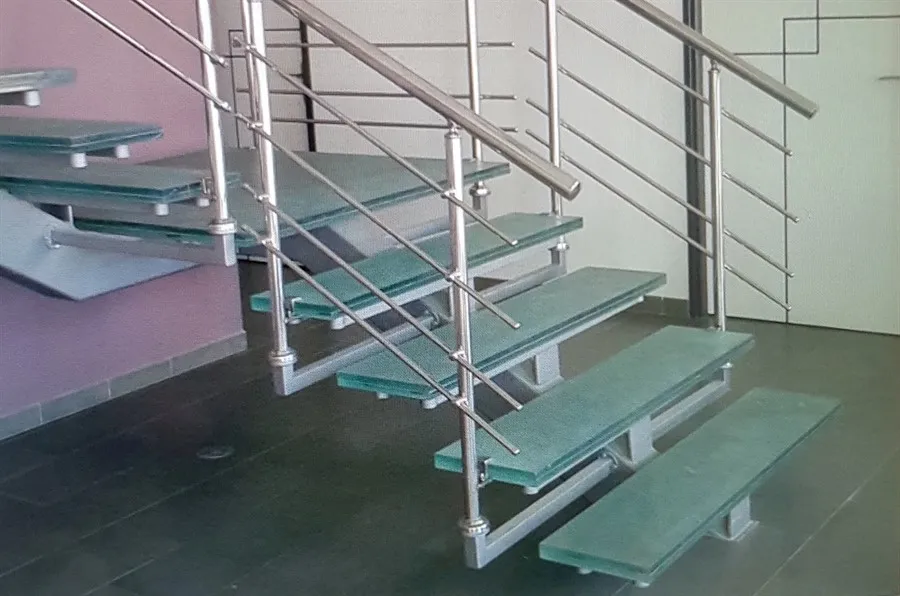
Built with handrails and vertical or horizontal tubes; clean, durable and low-maintenance. On stairs it is often used with glass infill or glass treads. 316 grade can be preferred near the coast, 304 grade further from the sea. The surface (brushed or polished) differs in look and in how easily it shows marks.
Aluminium railing
Light, rust-free and available in many colours with powder coating. Laser-cut patterned panels give balconies and terraces safety, privacy and style together; the open area ratio sets light and visibility. For pattern and material, see our laser-cut guide.
Iron and steel railing
A classic and economical solution, but outdoors it rusts quickly without galvanising and powder coat or a duplex system. Near the coast the quality of protection decides its life. Decorative iron railings are preferred on indoor stairs and classic façades.
Which railing where?
| Place | Points to watch |
|---|---|
| Balcony | Height, gaps, façade harmony, material durability |
| Indoor stairs | Handrail comfort, slope, glass or stainless harmony |
| Terrace and roof | Wind load, strength, material and fixing |
| Mezzanine and gallery | Child safety, view, lightness |
| Garden and pool surround | Humidity, durability and anti-climb design |
| Ramp and access | Handrail height and continuity, accessibility rules |
For a detailed balcony and stair comparison, see our article on balcony and stair railing choice.
Safety dimensions
Regulations set rules for railings such as minimum height, maximum gaps and load resistance. On housing balconies, roughly one metre in height and narrow gaps that prevent a child from getting stuck are generally assumed; in public areas and tall buildings the rules can be stricter. Confirm the current regulation for your project type and height with your installer and the project designer.
Main points on safety:
- Horizontal bars that make climbing easy can be a problem in homes with children; vertical infill or glass is safer.
- Infill spacing: Must be narrow enough that a child’s head and body cannot get stuck.
- Handrail and fixing: Resistance to horizontal load must be considered together with the strength of the floor at the fixing point.
- Glass: Prefer laminated glass where there is a fall risk.
Measuring
Correct measurements decide both price and safety.
- Measure the railing length separately, including corners and returns.
- Note the height from the floor to the handrail.
- State the floor type (concrete, tile, wood, marble) and thickness; it affects the fixing detail.
- On stairs, record the slope, number of steps and tread depth.
- Photograph every section; if there is an existing railing, say whether it must be removed.
- Have the exact dimensions confirmed on site; photos and approximate measurements are enough for a preliminary quote.
For a project in another city, see our ordering guide.
Installation and fixing details
A railing is only as strong as its connection to the floor and wall.
- Fixing method: Top-mounted (base plate), side-mounted or channel system; chosen according to floor type and strength.
- Anchoring: Chemical or mechanical anchors are used in concrete; the floor must be strong enough to carry the fixing.
- Waterproofing: On balconies and terraces, drilled points in the floor must be sealed; otherwise water gets in and rust starts.
- Alignment: The railing line must be plumb and straight; in glass sections joints and gaps must be even.
- Post-installation check: Check for wobble, loose screws and paint damage at contact points.
Style and architectural harmony
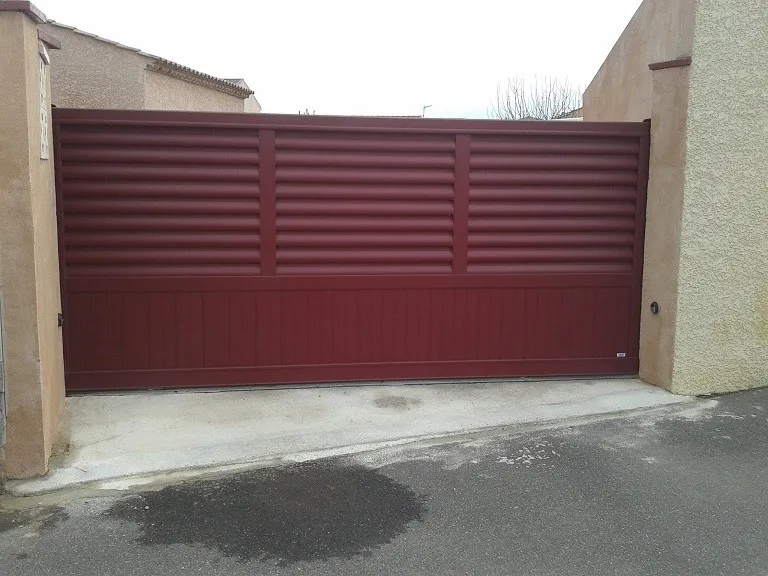
- Harmony with the façade and space: Colour and material should match the building façade, doors and other metal elements. To plan gates and railings together, see our guide to metal gates and railings.
- Privacy: Glass is transparent; if you want privacy, consider frosted glass or a patterned aluminium panel.
- Light and view: Glass or slim vertical profiles for an airy look; a patterned panel for a closed, sheltered look.
Care
- Wipe with clean water and a soft cloth a few times a year; more often near the coast.
- Avoid abrasive sponges and chlorine-based cleaners.
- On painted surfaces, touch up scratches and knocks early.
- Check screws and fixings regularly; tighten any that loosen.
- Remove stains and discolouration on stainless surfaces with suitable cleaners.
Items that affect cost
The exact price varies with dimensions and installation; when comparing quotes, compare the same scope:
- Material type, quality and thickness (glass thickness, stainless grade, aluminium profile)
- Railing length, height and number of corners/returns
- Design and infill type (laser-cut, vertical tube, glass)
- Surface coating and colour
- Fixing detail, anchoring and waterproofing
- Removal, transport and installation conditions
Common mistakes
- Looking only at appearance and neglecting safety and fixing.
- Using ungalvanised, unpainted steel outdoors.
- Measuring at one point and skipping floor and corner details.
- Drilling the balcony floor without thinking about waterproofing.
- Choosing horizontal infill that invites climbing in a home with children.
- Looking only at the cheapest quote without comparing material quality and installation scope.
Next steps
In Yerpa’s railings category you can browse frameless glass railings, stainless steel handrails and stair railings, and laser-cut aluminium balcony and terrace railings. For climate details of materials, see our article on choosing materials in coastal cities.
Share the location, approximate length, preferred material or look and photos through our contact page or on WhatsApp, and we will prepare suitable options and a quote together.
Continue this guide
Frequently asked questions
Which railing material suits a balcony in İzmir best?
Near the sea, 316-grade stainless steel or powder-coated aluminium; further inland, 304-grade stainless or painted galvanised steel. If you use a glass balustrade, the load-bearing fixings must be equally durable.
What are the rules for railing height and spacing?
Regulations set rules such as a minimum height and a maximum gap for railings; on housing balconies roughly one metre in height and narrow gaps that prevent a child from getting stuck are generally assumed. For exact values consult the current regulation and your installer’s calculations.
Is a glass railing safe?
With tempered, laminated glass of suitable thickness and the right profiles and fixings, it is a safe solution against falls. Even if laminated glass breaks, it holds the pieces on the interlayer, so it is preferred where there is a fall risk. Thickness and fixing details must be set per project.
Do I need permission to change a railing in an apartment block?
Because a railing affects the look of the façade, the management plan and owners’ meeting decisions may apply in apartment blocks and housing estates. Check the building management and local municipal rules before installing.
How do I measure for a railing?
Note the railing length including corners and returns, the height and the floor type (concrete, tile, wood). For stairs you need the slope and number of steps. You can get a preliminary quote with photos and measurements; the exact dimensions must be confirmed on site before production.
What information do I need to get a railing quote?
The location (balcony, stairs, terrace, mezzanine), approximate length, preferred material or look, floor type and photos. You can reach Yerpa at +90 (232) 253 04 60, on WhatsApp at 0555 025 53 35 or through the contact form.
Tags